
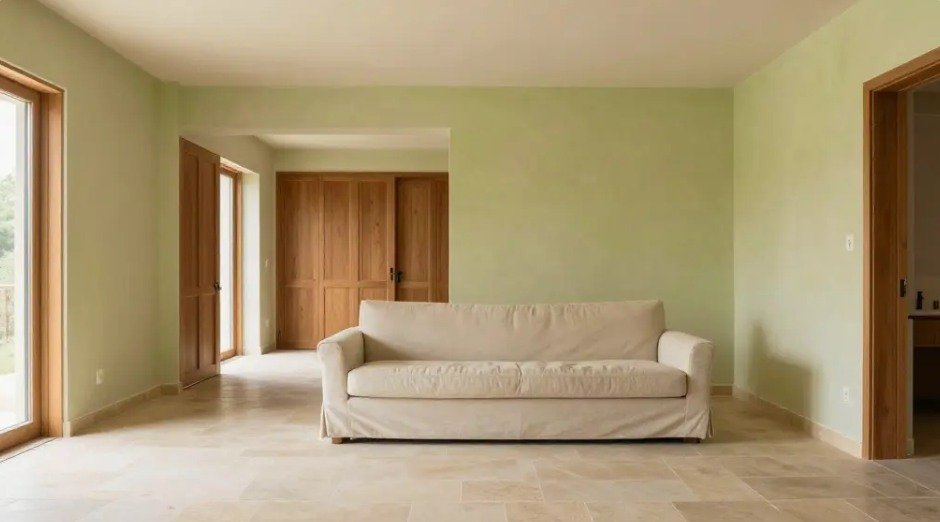
A full home fit-out in Gurugram asks a simple question. Who is accountable? Most projects do not fail on taste. They fail on coordination — a designer with one set of drawings, a carpenter with another, an electrician waiting on the plumber, and a homeowner holding the schedule together in a group chat. The turnkey model removes that burden. One team, one contract, one point of accountability from brief to keys.
- Mapping your brief, rooms, and budget before design begins
- What a turnkey scope covers: civil work, joinery, finishes, and handover
- Fixed schedules, in-house supervision, and how to avoid vendor coordination
This guide walks through how to plan a turnkey fit-out so the schedule holds and the handover lands on the date you were given.
Start with the brief, the rooms, and the budget
Before any design begins, resolve three things on paper: what you need, which rooms are in scope, and what the project can spend.
The brief. Write down how you actually live. How many people, how often you host, whether you work from home, how much storage you genuinely need. A two-bedroom flat for a couple and a four-bedroom villa for a family of five are different briefs, and they read differently in the drawings.
The rooms. List every space in scope — living, kitchen, bedrooms, bathrooms, balconies, and any home theater or study. For each room, note the fixed elements that cannot move: beams, columns, plumbing stacks, and window positions. These constraints decide layout long before furniture does.
The budget. Set one number for the whole project, then split it. A workable split for a Gurugram fit-out usually lands near 45–50 percent on civil and services (masonry, plumbing, electrical, false ceilings), 30–35 percent on joinery (wardrobes, kitchen, TV units, storage), and the remainder on finishes, lighting, and soft furnishing. Agree this split before design starts. A budget agreed after drawings exist is a negotiation. A budget agreed before is a constraint the design works within.
What a turnkey scope actually covers
The value of turnkey is a single scope. Nothing falls between trades because one team owns every line.
Civil work. Demolition, masonry, plumbing and drainage, electrical points, waterproofing, and false ceilings. This is the layer no one sees at handover and everyone feels later.
Joinery. Wardrobes, the modular kitchen, TV and storage units, study desks, and any bespoke furniture built in the workshop to your measurements. Joinery is where a home reads as considered or as assembled. Ask to see workshop samples and edge details, not just renders.
Finishes. Flooring, wall treatments, paint or lime plaster, tiling, stone counters, and the lighting plan. Finishes set the mood. They also hide the seams between everything above.
Handover. Snagging, cleaning, and a walkthrough where every item on the scope is checked against what was delivered. The keys change hands only when the scope is complete.
A turnkey scope should be documented room by room, item by item, so there is no ambiguity about what is included.
Fixed schedules and in-house supervision
Two commitments separate a turnkey team from a coordinator: a schedule you can hold them to, and supervision that is on site, not on call.
Fixed schedules. Ask for a dated project timeline with milestones — site handover, civil completion, joinery installation, finishing, and final handover. A serious team will put dates against each stage and tie payment to them. Week-by-week progress without a fixed end date is not a schedule.
In-house supervision. The people checking quality should be the same people accountable for it. In-house supervisors on site catch alignment, level, and finish issues while they are small. When design, execution, and quality are split across vendors, defects surface late, and late defects cost the most to fix.
How to avoid vendor coordination
You avoid coordination by removing the need for it.
- One contract, one team. Design, civil, joinery, finishing, and handover sit with a single accountable party. You talk to one person.
- One set of drawings. Every trade works from the same approved drawings. No interpretation, no rework.
- Payment tied to milestones. Release against completed stages, not against dates alone.
- Written scope and changes. Change orders in writing, priced before work starts.
The test of a turnkey partner is simple. Ask who is on site, who signs off on quality, and what happens if a stage slips. Clear answers mean one accountable team. Vague answers mean you are still coordinating vendors, only with more paperwork.
From brief to keys
Planning a turnkey fit-out in Gurugram is not a design exercise. It is a planning one. Resolve the brief, the rooms, and the budget before design begins. Understand that turnkey means one scope across civil, joinery, finishes, and handover. Hold your team to fixed schedules and in-house supervision. Done in this order, the project stops being a set of vendors you manage and becomes a single accountable process — one that ends where it was promised, with the keys in your hand.